Public Consultation and Community Design Workshops
Author: David Campbell BA BArch MA PgDIP RIBA
Estimated reading time: 4 minutes
When architectural projects serve communities rather than individual clients, success depends on genuine public engagement. At Vision + Design, our work with organisations like The Soup Kitchen London demonstrates how thoughtful consultation and participatory design workshops transform stakeholder involvement from obstacle into opportunity.
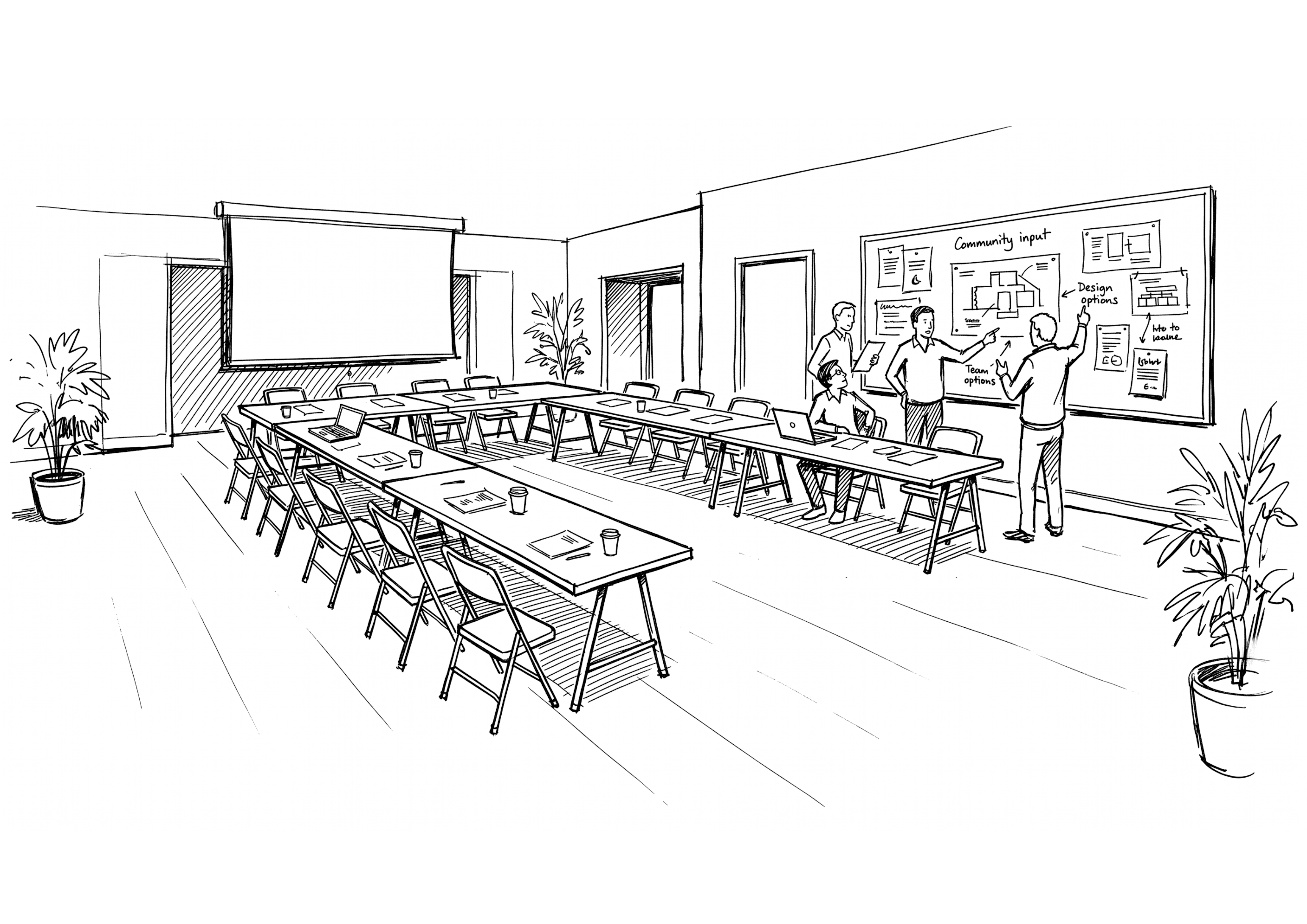
Why Public Consultation Matters
Community buildings—whether cafés, cultural centres, or charitable facilities—serve diverse stakeholders with competing priorities. Traditional top-down design approaches often miss crucial insights that only regular users understand. Worse, they can generate opposition that delays or derails projects entirely.
Effective public consultation achieves multiple objectives:
Better Design Solutions: Users possess intimate knowledge of how spaces actually function. Their insights reveal opportunities and constraints that distant designers might miss.
Stakeholder Buy-In: People support what they help create. When communities participate in design development, they become advocates rather than opponents.
Funding Success: Grant applications increasingly require evidence of community engagement. Demonstrated consultation strengthens cases to funders that projects genuinely serve community needs.
Planning Approval: Applications for community facilities benefit enormously from evidenced public support. Planning committees respond positively when local residents and stakeholders actively endorse proposals.
The Soup Kitchen London: A Case Study
Our work with The Soup Kitchen London exemplifies effective community consultation. This established charity operates underutilised dining facilities with potential for transformation into flexible, multi-functional community spaces.
The challenge wasn't purely architectural—it was understanding diverse stakeholder needs:
Service users seeking welcoming, dignified environments
Staff requiring functional, efficient layouts
Volunteers needing spaces that facilitate their crucial work
Local residents wanting community benefits from the facility
Funders demanding demonstrated community need and support
Designing the Consultation Process
Effective consultation requires structured methodology:
Stakeholder Mapping: We identify all parties with legitimate interests in the project—from daily users to occasional visitors, immediate neighbours to borough councillors.
Inclusive Formats: Different stakeholders engage differently. We offer multiple participation routes: in-person workshops, online surveys, one-to-one interviews, visual preference studies, and follow-up feedback sessions.
Accessible Communication: Architectural jargon alienates. We present ideas through sketches, physical models, precedent images, and simple diagrams that invite response rather than intimidate.
Documented Outcomes: Consultation findings get synthesised into clear reports showing how community input shaped design development. This documentation serves planning applications and funding bids.
Design Workshop Methods
Participatory workshops transform passive consultation into active co-design:
Visioning Sessions: Early workshops explore aspirations without constraint. What does success look like? How should spaces feel? What activities should they support?
Precedent Review: Showing examples of similar successful projects helps participants articulate preferences and develop shared design language.
Layout Testing: Simple floor plan exercises where participants arrange spaces using movable cards reveal priorities and functional requirements.
Material Selection: Physical samples let stakeholders influence aesthetic decisions, creating ownership of final design direction.
Iterative Refinement: Multiple workshop rounds allow designs to evolve based on feedback, with each session building on previous input.
From Consultation to Delivery
Effective consultation doesn't end when design concludes. We maintain stakeholder engagement throughout:
Planning application support, with community members attending committee meetings
Construction phase updates keeping stakeholders informed of progress
Completion celebrations recognising community contribution to success
Professional Facilitation Makes the Difference
Successful community consultation requires professional expertise beyond standard architectural practice:
Facilitation skills that draw out quieter voices whilst managing dominant participants
Conflict resolution when stakeholder priorities compete
Translation of community aspirations into buildable, affordable architecture
Documentation that satisfies planning requirements and funding criteria
At Vision + Design, we integrate community engagement expertise with comprehensive architectural services, ensuring public consultation enhances rather than delays project delivery.
Whether you're a charity planning facility improvements, a local authority developing community spaces, or a developer seeking community support for sensitive projects, effective consultation and participatory design workshops create the foundation for successful outcomes.
Planning a community project requiring public engagement? Contact Vision + Design to discover how our consultation expertise and workshop facilitation can transform stakeholder involvement into project advantage.
→ Email us at info@visionanddesign.co.uk
→ Or call us on 07931910243